 BoldSign Team
TL;DR: On July 14, 2025, we announced a partnership with Evrotrust to bring qualified electronic signatures (QES) to BoldSign. You turn on QES for a signer, Evrotrust checks their ID, and the document is signed with their qualified certificate. Our QES page shows how it works today.
Before this partnership, BoldSign offered simple electronic signatures (SES), and it still does by default. Our customers in the EU kept asking for a higher level. Some of their contracts needed a signature with the legal weight of ink.
This post records what we launched and how QES with Evrotrust works now. It also covers when banking, financial services and insurance (BFSI) teams may need it.
What did BoldSign announce with Evrotrust?
We announced that BoldSign users could ask any signer for a QES, with Evrotrust as the identity provider. Evrotrust is a qualified trust service provider: it checks who the signer is and issues their qualified certificate.
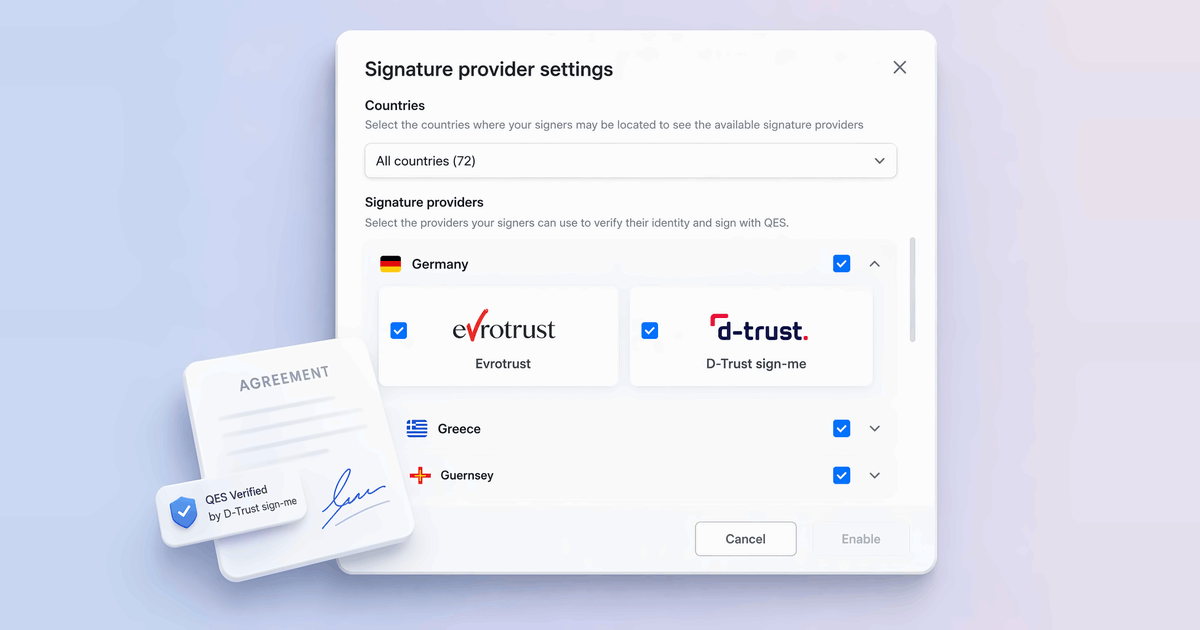
Since then, we have added more QES providers. Evrotrust stays on by default and serves signers in 55 countries, including the UK and the US.
What is a qualified electronic signature (QES)?
A QES is the top signature level under the EU rules on electronic identification and trust services (eIDAS). Under eIDAS Article 25, it has the same legal effect as a handwritten signature.
Think of a bank clerk who checks your passport before you sign a loan form. A QES adds that same ID check to an online signature. A simple signature records an email address; a QES records a checked identity.
How does QES with Evrotrust work in BoldSign?
You turn on QES for each signer who needs it, in the documents and templates you already use. The signer then verifies with Evrotrust and signs in its app.
- Upload the document, add signers and switch on QES in a signer’s settings.
- The signer registers with Evrotrust once: they scan an ID and take a selfie in the Evrotrust app.
- On the signing page, the signer fills in their fields, selects Verify and enters a personal ID code, mobile number or email address.
- The signer confirms their identity in the Evrotrust app and taps Sign.
The QES help article covers every setting. Developers can follow our guide to sending QES documents with the BoldSign API.
When does an eSignature for BFSI work need a QES?
You need a QES when the law or the contract behind a document asks for one. For many other agreements, a simple electronic signature is enough.
A QES also helps when the other side must check the signature later. A counterparty can look up the provider on the EU Trusted Lists and find a qualified provider behind it.
Our pages on eSignatures for banking and for insurance show other common workflows. Our guide to the QES regulations in the EU explains the legal side in more detail.
What should you check before sending a QES document?
A few rules apply once QES is on for a document. Plan for them before you send.
- The document can be 30 megabytes (MB) at most.
- Each signer needs their own signing order.
- Reviewers and group signers cannot use QES.
- The audit trail and attachments download as separate files.
- Each signer needs an Evrotrust account or an identity with another enabled provider.
How much does QES cost, and which plan do you need?
QES costs $3 per signing attempt, charged whether the attempt succeeds or fails. It is an add-on to the Business plan, the Premium plan and the Enterprise API plan.
The Business plan costs $15 per user a month, billed yearly. Your admin sets 1 to 10 attempts per signer, and the Business plan also includes ID verification for signers.
Sending QES documents through the BoldSign API needs the Enterprise API plan, from $30 a month with 40 envelopes. Prices are in USD as of November 2026.
Where can you go from here?
Try QES on your own documents, or see it with our team first.
- Start a 30-day free trial of BoldSign.
- Book a demo to see a QES document signed from start to finish.
- Read our guide to QES compliance in BoldSign.
Questions about QES? Write to us at support@boldsign.com.
Frequently asked questions
When did BoldSign partner with Evrotrust?
We announced the partnership on July 14, 2025. It added qualified electronic signatures to BoldSign, with Evrotrust checking each signer's identity.
What does Evrotrust do in a BoldSign QES?
Evrotrust is a qualified trust service provider. It checks the signer's ID and selfie, issues their qualified certificate and runs the signing step in its app.
Is a QES legally binding in the EU?
Yes, when it meets the eIDAS rules for a qualified signature. Under Article 25, a QES has the same legal effect as a handwritten signature in every EU member state.
Which countries does Evrotrust cover?
Evrotrust serves signers in 55 countries across Europe and beyond, including the UK and the US. Our QES help article lists every country.
Can signers outside Evrotrust's countries complete a QES?
Often, yes. Your admin can turn on other QES providers by country, and each signer picks one they already have an identity with.
How much does a QES cost in BoldSign?
QES costs $3 per signing attempt, whether it succeeds or fails. QES is an add-on to a paid plan from Business up, and prices are in USD.
Do banks and insurers need a QES for every document?
Only when the law or the contract behind the document asks for one. Many agreements accept a simple electronic signature, so check with your legal team.
Can I send a QES document through the BoldSign API?
Yes. You set QES on each signer in the API request, and our guide to sending QES documents with the API shows the code.

BoldSign Team
The official team behind BoldSign—the simple, secure eSignature solution trusted by businesses worldwide. Our platform helps individuals and teams create, sign, and manage documents effortlessly while maintaining full compliance. Experience BoldSign yourself with a free trial or request a personalized demo to see it in action.
More posts by BoldSign Team