Qualified Electronic Signature (QES) Regulations in the EU: What eIDAS and eIDAS 2 Require
 Kate Dobson
TL;DR: A qualified electronic signature (QES) is the top level of electronic signature under the EU rules on electronic identification, authentication and trust services (eIDAS). In law, it has the same effect as a handwritten signature, and every EU country must accept it. We offer QES signing through qualified trust service providers that check each signer’s ID.
Say you sign a supply contract with a partner in Germany, and their lawyer asks for a QES. You need to know what that means and who can issue one. You also need to know if the signature will hold in other EU countries.
This guide walks through what the EU rules say, in plain words, with links to each article. Then it shows how a QES works with us.
What is a qualified electronic signature under EU law?
A QES is an electronic signature that meets the strictest of three levels set by eIDAS. The eIDAS Regulation (EU) No 910/2014 defines it in Article 3(12).
Think of a passport. Anyone can write their name on a card, but a passport counts because a recognised office checked who you are first. A QES works the same way: an approved provider checks the signer before the signature can count as qualified.
You can also read the current consolidated text of eIDAS, with all later changes included.
What are the three levels of electronic signature in eIDAS?
eIDAS sets out three levels of electronic signature in Article 3. Each level adds checks to the one before it.
- Electronic signature: data in electronic form that the signer attaches to other data to sign it (Article 3(10)).
- Advanced electronic signature: an electronic signature that meets the four rules in Article 26 (Article 3(11)).
- Qualified electronic signature: an advanced signature made with a qualified device and based on a qualified certificate (Article 3(12)).
All three levels have legal effect. Article 25(1) says a court may not refuse a signature as evidence just because it is electronic. The same goes for a signature below the qualified level.
What makes an electronic signature qualified?
A QES needs three things: the four advanced signature rules, a qualified certificate and a qualified signing device. Each part comes from a different article.
What are the advanced signature rules?
Article 26 lists four rules for every advanced electronic signature, and so for every QES.
- The signature is uniquely linked to the signer.
- The signature can identify the signer.
- The signer can use the signing data with a high level of confidence, under their sole control.
- Any later change to the signed data can be detected.
Who issues the qualified certificate?
A qualified certificate links the signature to a named person. Under Article 3(15), only a qualified trust service provider can issue one, and it must meet the rules in Annex I.
Article 22 asks each Member State to publish a trusted list of the qualified providers it supervises. You can check a provider against that list before you rely on it.
What is a qualified signing device?
The signing device holds the key that creates the signature. Article 29 says it must meet the rules in Annex II, and Article 30 asks bodies chosen by each Member State to certify it.
Is a qualified electronic signature valid in every EU country?
Yes, when it is based on a qualified certificate from a qualified trust service provider. Article 25(2) of eIDAS gives a QES the same legal effect as a handwritten signature.
Cross-border use was first set out in Article 25(3). eIDAS 2 moved that rule into a new Article 24a(1), with the same meaning. A QES based on a qualified certificate from one Member State counts as a QES in all the others.
Article 27(3) adds a limit for public bodies. A Member State may not ask for a signature stronger than a QES for cross-border use of an online public service.
What changed with eIDAS 2?
Regulation (EU) 2024/1183 of 11 April 2024, often called eIDAS 2, amends the original rules. The definition of a QES and its legal effect stay the same.
European Digital Identity Wallets
Each Member State must provide at least one European Digital Identity Wallet. Article 5a(5)(g) says the wallet must let all natural persons sign with a QES by default and free of charge.
Member States may limit the free QES to non-professional use. Your business documents may still need a paid QES through a provider.
Remote signing devices
eIDAS 2 also covers signing keys that a provider holds for you on its servers. Article 29a sets the rules for a qualified trust service provider that manages these remote signing devices.
The transition rules in the new Article 51 set two dates that have now passed. Older qualified certificates for people, issued under the 1999 EU directive on electronic signatures, counted as qualified only until 21 May 2026. Providers could manage remote devices without that qualified status until the same date.
When do you need a QES instead of a simpler signature?
Most business documents can use a simple or advanced electronic signature, since eIDAS gives every level legal effect. You need a QES when a law, a public body or the other party asks for one.
Ask your legal team which documents need a QES in each country you work in. Use the simpler levels for everyday agreements, and keep QES for the documents that call for it. Our guide to electronic and digital signatures explains how the levels differ in practice.
How does a QES work in BoldSign?
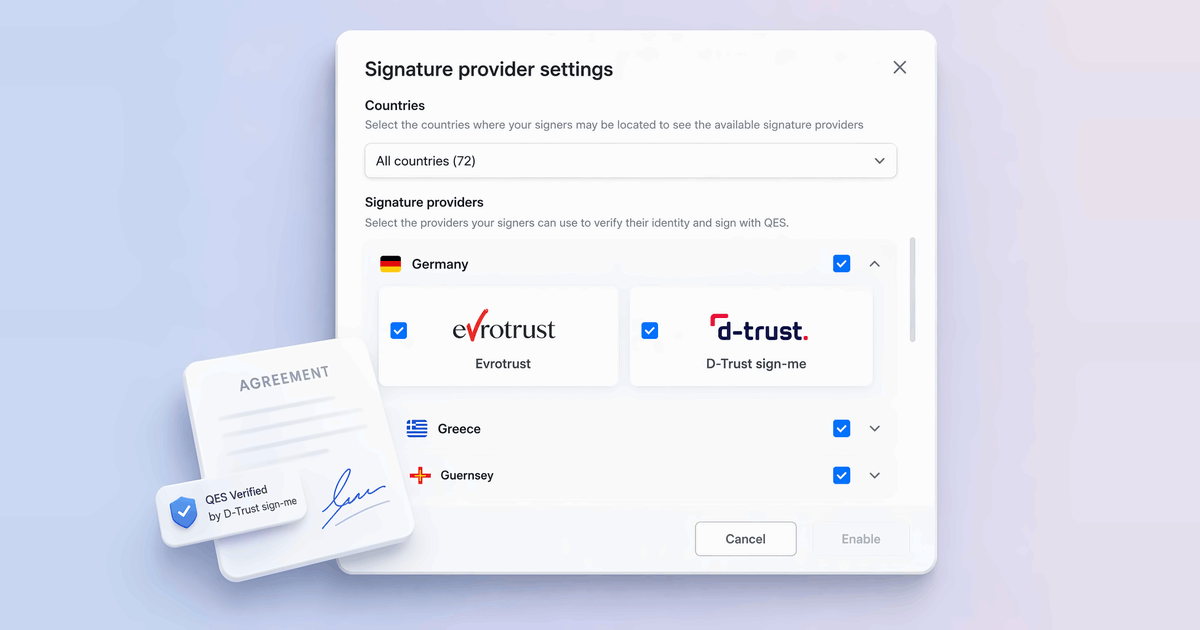
We send the document, and a qualified trust service provider checks the signer’s ID and issues the qualified certificate. The steps below follow our QES help article.
- An admin turns on Qualified Electronic Signatures (QES) under Settings > Business Profile.
- The sender adds a recipient and turns on QES in that recipient’s Settings menu.
- The signer chooses a country and a provider on the signing page.
- The provider checks the signer’s identity, and the signer completes the QES.
Evrotrust is on by default and covers 55 countries. Your admin can add 13 more providers by country, such as D-Trust sign-me, Smart-ID and Swisscom. Our post on QES compliance in BoldSign covers how we set it up for your account.
What should you watch out for with QES?
A QES takes more setup than a simple signature, for you and for your signers. Plan for these limits from our help article before you send.
- The signer needs an existing account or ID with the chosen provider.
- Each signer needs their own place in the signing order.
- Reviewers and signing groups cannot use QES.
- Documents with QES must be 30 megabytes (MB) or smaller.
Each verification attempt is charged, whether it succeeds or fails. You can set from 1 to 10 attempts per signer to keep costs in check. Our security policy explains how we protect signed documents.
Which BoldSign plan includes QES, and what does it cost?
QES is an add-on on the Business, Premium and Enterprise API plans, as listed on the BoldSign pricing page in November 2026. It costs $3 per signing attempt, in USD.
The Business plan costs $15 per user a month, and the Premium plan costs $99 a month for unlimited users, both billed yearly. Developers who send QES documents through the BoldSign API use the Enterprise API plan, from $30 a month with 40 envelopes.
How do you start sending documents for QES?
You now know what eIDAS asks of a QES and how we handle each step. Choose where to go next.
- Start a 30-day free trial and explore electronic signatures with BoldSign.
- Request a demo to see QES signing with your own documents.
- Read how the rules differ for UK signers in UK eIDAS vs EU eIDAS after Brexit.
Frequently asked questions
What is a QES signature?
A QES is the top level of electronic signature under EU law. A qualified trust service provider checks the signer's ID and issues a qualified certificate. The signature is then made with a certified signing device.
Is a qualified electronic signature valid in all EU countries?
Yes, when it rests on a qualified certificate from a provider that is qualified in an EU Member State. eIDAS says every other Member State must then treat it as a QES too.
Is a QES legally binding like a handwritten signature?
Yes, when it meets the eIDAS rules for a QES. Article 25(2) gives it the same legal effect as a handwritten signature. The contract itself must still be valid under the law that applies to it.
Can you recommend a QES platform that works across multiple EU countries?
Look for a platform that works with several qualified trust service providers, since each one serves its own countries. We offer 14 providers. Evrotrust is on by default and covers 55 countries, and your admin can add others by country.
Who issues the certificate behind a QES?
A qualified trust service provider issues it. Each EU Member State publishes the providers it supervises in a national trusted list, so you can check one before you rely on it.
What is the difference between an advanced and a qualified electronic signature?
Both are linked to one signer and show any later change to the document. A qualified one adds two more parts: a qualified certificate and a certified signing device. Only the qualified one has the legal effect of a handwritten signature.
Did eIDAS 2 change how a QES works?
The core rules stayed the same. eIDAS 2 added European Digital Identity Wallets, which let people sign with a QES free of charge. It also set rules for providers that hold signing keys on a signer's behalf.
Does BoldSign offer a QES API?
Yes. You send a QES document through the BoldSign API by setting EnableQes to true on a signer. QES must first be turned on in your account settings.

Kate Dobson
Katherine is a Paralegal Team Lead who focuses on regulatory compliance for Syncfusion and its Bold Products. She enjoys researching emerging data privacy legislation and cybersecurity frameworks. She works to break down complex regulatory requirements in order to bridge the gap between technical and legal requirements, ensuring that best practice is in place for companies and individuals feel empowered to know their data privacy rights.
More posts by Kate Dobson