Notary vs Witness vs Attestation: What's the Difference?
 Edwin Omondi Odoyo
TL;DR: A witness watches you sign. Attestation is the witness signing to confirm what they saw. A notary public is an official who checks your ID, watches you sign and adds a seal. So in notary vs witness vs attestation, the notary adds the most proof. You can collect witness signatures with us online, or face to face with in-person signing.
You have a form in front of you. One line says “Attest”, another says “Witness”, and a third asks for a notary. They look alike, but each one proves something different.
This guide explains what each word means, in plain terms. We are an eSignature company, not a law firm. Treat this as background, and not as legal advice.
For a specific document, ask a lawyer or the office that will receive it.
What is the difference between a notary, a witness and attestation?
All three help prove that a signature is real. They differ in who does the job and how much proof they add.
Think of a school sports day. A parent who sees the race is a witness, and a parent who signs the result sheet is attesting.
The official referee, who checks names and stamps the sheet, is the notary.
- A witness watches the signing.
- Attestation is the witness signing to confirm what they saw.
- A notary public is an official who checks ID, watches the signing and adds a seal.
So the notary vs witness question comes down to authority. The attestation vs witness question comes down to a signature.
Attest vs witness: is attest the same as witness?
Not quite. To witness is to watch the signing, and to attest is to sign and confirm what you watched.
Most people who attest are witnesses first. In attest vs witness, the difference is the signature.
What does attest mean on a contract?
Cornell Law School’s Wex dictionary defines attest as “to testify or confirm that something is true, genuine, or authentic”. On a contract, it usually means a person watched the signing and then signed too.
So what is attest on a contract in practice? A line marked “Attest” is for that second signature. The attest meaning on contract pages is the same everywhere: proof that the signing took place.
People also ask what does attest mean in a contract when the line sits next to a company name. The answer is the same. The person on that line confirms the signature above it.
What does it mean to attest a signature?
Attesting a signature means you saw the person sign and you sign to say so. Wex calls this attestation and notes the witness signature is mostly there to keep evidence.
In one line, the attest signature meaning is: I saw this person sign. So what is an attest signature? It is the witness’s name on that line, and it does not mean they agree with the terms.
Who signs the attest line of a contract?
The person named in the signature block signs it. Read the block first, since it often names the role or title.
When it names no one, check your organization’s rules on who can sign for it. Your lawyer can confirm who should sign the attest line on contract pages for your company.
What is attestation?
Attestation is “a kind of testimony or confirmation”, says Wex’s entry on attestation. That is the attestation meaning in legal use.
People often sign a deed or a will in front of a witness. The witness then signs to confirm the signature is genuine. That act is a witness attestation, and the signature they add is an attestation signature.
Wex adds a second meaning. In many US states, attestation can also mean an official checks a copy against the original and signs it as correct. The person who does that is the attesting official.
What is signature attestation?
Signature attestation is the act of attesting a signature. You may also see it called attestation of signature. Either way, a witness confirms who signed and that they signed.
What is a signed attestation?
A signed attestation is a written statement, signed by the person making it, that confirms something is true. A form might ask you to attest that your details are correct.
What is an attesting witness?
An attesting witness is a witness who signs the document after watching it signed. Wex’s witness entry puts it simply: “A witness may also be someone who attests to a signature on a document.”
Who is an attestor?
An attestor is the person who attests. On most documents, that is the attesting witness.
So what is an attestor in plain terms? Someone who saw the signing and signed to confirm it. That is the attestor meaning you will meet on contracts, deeds and wills.
Who can attest a document?
Who can attest a document depends on the law that applies and on the document itself. A common choice is an adult who can understand what they are doing.
The witness should also have no stake in the deal. Rules differ by state and by document, so check before you choose someone.
The same advice applies to who can attest a signature. Anyone suitable can attest. Notary publics can do it too.
Can a notary attest a signature? Yes, though many documents need only a plain witness.
What is the person called who witnesses a signature?
The person who witnesses a signature is called a witness, or an attesting witness once they sign. So what do you call someone who witnesses a signature? A witness.
And what is it called when someone witnesses a signature? Witnessing, or attestation when they sign to confirm it.
A person who witnesses legal documents as an official job is more than a witness. Notary public is the title for that role. Each person who witnesses signatures as a notary is authorized by law to do it.
What is a person who verifies signatures called?
A person who verifies signatures is usually a notary public. A notary checks the signer’s ID before they watch the signing.
Who verifies signatures depends on the document, but a notary is the common answer.
Witness vs notary: is a witness the same as a notary?
A witness can be almost anyone. A notary public is authorized by law to do the job.
Wex describes a notary public as “a person authorized by law to administer oaths, certify documents and signatures”. Requirements vary by state.
What is a notary witness?
A notary witness is a notary public who watches a signing. In that role, a notary acts much like an official witness of documents. Wex’s notarize entry lists what the notary adds:
- Checks the identity of the signer.
- Checks that they sign willingly.
- Records the act in the notary’s records.
- Signs and adds an official seal.
Witness signature vs notary: which do you need?
Use the one the law or the receiver asks for. A witness signature shows someone saw the signing. A notary adds identity checks, a record and a seal.
Some documents need both a notary and witness. Check the rules for any witness for legal documents before the signing day.
What is notary attestation?
People use notary attestation to mean a notary’s formal confirmation of a signing. Notarial attestation is the same idea in more formal words.
So what does notary attestation mean on a form? Usually, a notary checked the signer and certified the signing. Notary attestation means more proof than a witness attestation alone.
A notarized attestation is a signed statement that a notary also certified. A notary attested copy is a copy the notary certifies as matching the original. Wex lists certified copies as one type of notarial act.
Who is the notary public’s attestation intended to serve?
Everyone who relies on the document. Wex says notarization is meant to deter fraud. A notary public attestation helps a bank, court or office trust that the right person signed.
When performing a witnessing or attesting of a signature the notary is not required to do what?
State notary laws list exactly what a notary must check. In general, the notary checks who signs and that they sign willingly.
Checking whether the document’s contents are true or fair is outside that job. Legal advice is outside it too, unless the notary is also a lawyer. Your state’s notary office publishes the exact rules.
Attestation vs notary: is attestation and notary same?
No. Attestation can come from an ordinary witness, but notarization needs a notary public.
People often ask: is attestation and notary same, or is notary and attestation same? The notary vs attestation answer is the same both ways.
What is the difference between notary and attestation?
The difference between attestation and notary work is authority. Any suitable witness can attest. Only a notary can notarize and add an official seal.
Here is the attestation and notary difference in one line: attestation proves someone saw the signing. A notary also proves who signed. The notary and attestation difference matters most when an office or bank must accept the document.
What is the difference between attestation and notarization?
Attestation and notarization both add proof to a signature. Notarization adds more, because a notary checks ID and keeps a record.
| Witness | Attestation | Notary public | |
|---|---|---|---|
| Who does it | Almost any suitable adult | The witness | A person authorized by law |
| What it shows | Someone saw the signing | The witness confirms it in writing | Identity, willingness and the signing |
| Official seal | No | No | Yes |
| Keeps a record | No | No | Yes |
In the attestation vs notarization choice, the document’s rules decide. Notarized vs attested comes down to the seal and the ID check. Attested vs notarized documents can both be valid, each in its place.
How is attestation different from other legal terms?
Attestation is easy to mix up with a few other words. Here is how each one differs.
Attest vs testify
Wex’s testify entry defines testify as “to give one’s testimony under oath as a witness”. Testimony is spoken in a legal setting. Attesting is usually done on paper.
So attest vs testify is a written note against spoken evidence. The two can meet: a witness signs a document, then may testify later if a court asks.
Attest vs confirm
Attest vs confirm is a matter of weight. To confirm is the everyday word. To attest is to confirm formally, often in writing and in a legal setting.
Attestation vs affirmation
An affirmation is a promise to tell the truth. Under Federal Rule of Evidence 603, a witness gives “an oath or affirmation to testify truthfully”.
In attestation vs affirmation, the first confirms a signing. The second is a promise about your own words.
Attestation vs affidavit
An affidavit is “a sworn statement a person makes before a notary or officer of the court”, says Wex’s affidavit entry. A notarized witness statement is often an affidavit.
So in affidavit vs attestation, the affidavit is your own sworn account of facts. An attestation confirms that someone else signed.
Attestation vs acknowledgement
An acknowledgment is “a formal declaration before an official that one has executed a particular legal document”, per Wex. You tell a notary that the signature is yours.
Attestation and acknowledgment differ in who speaks. In attestation, a witness confirms your signing. In an acknowledgment, you confirm it yourself, to an official.
Is a witness statement or a will different?
Some documents have their own rules for witnesses. Wills are the common example.
Does a witness statement have to be notarized?
A witness statement does not always have to be notarized. Courts and agencies set their own forms, so ask the receiver which one they accept.
Why are wills a special case?
State law sets how a will is signed and witnessed. The federal Electronic Signatures in Global and National Commerce (ESIGN) Act does not apply to those rules.
You can read that exception in section 7003 of Title 15 of the US Code.
Many wills include an attestation clause, signed by the witnesses. Wex’s attestation clause entry calls it a provision “signed by witnesses”. Some forms label this part a certificate of witness.
Can a notary, witness or attestation happen online?
Yes, in many cases. Section 7001(g) of the ESIGN Act says a notary’s electronic signature can meet a rule that asks for notarization.
The other details the law requires must be attached to the record too.
Each state decides how its notaries may work online. Check with your state’s notary office before you plan a remote notarization.
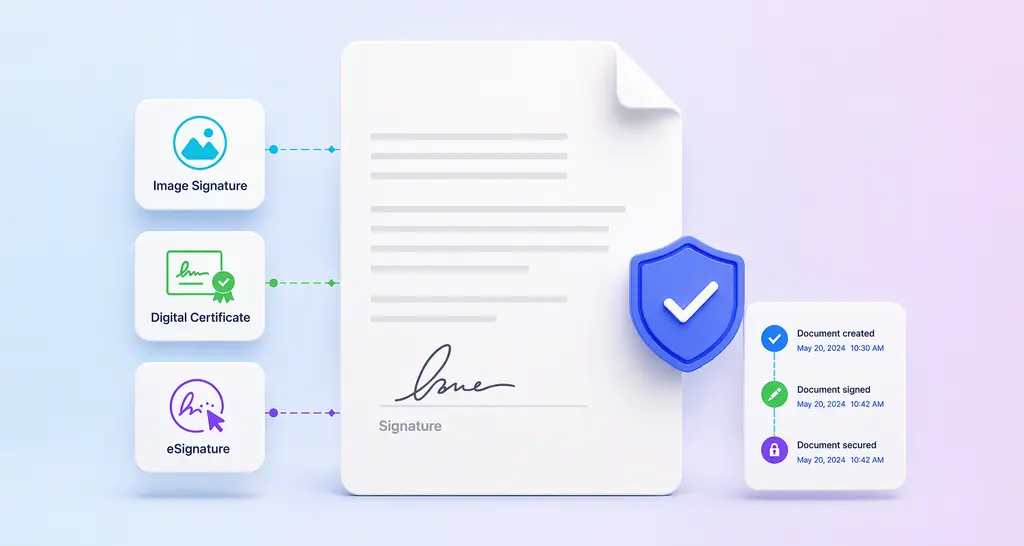
Document witnessing can also happen online, where the law allows an electronic witness signature. A witness for document signing can sign as one more signer, after the person they watch.
How do you collect witness signatures with BoldSign?
We do not offer notarization. You can still collect signatures from each witness for signing documents, keep them in order and keep a full record.
- Upload the document and add each party as a signer.
- Add the witness as one more signer, with their own signature field.
- Turn on signing order so the witness signs after the person they watch.
- Send the document and track who has signed.
Use an in-person signing session when the witness must be in the room. A team member hosts the session on a tablet or computer, and the audit trail names that host.
What does BoldSign record for each signing?
Our audit trail records names, email addresses, internet protocol (IP) addresses and devices for everyone involved. It logs every view and signature with a time.
A tamper-evident seal shows any change made after signing. For extra checks on who signs, our ID verification has signers photograph a government ID and take a selfie.
Which BoldSign plan do you need, and what does it cost?
Plans are listed on the BoldSign pricing page. Prices are in USD, billed yearly.
- Our free Essential plan includes the audit trail and tamper-evident documents.
- Our Growth plan, at $5 per user a month, adds in-person signing.
- Our Business plan, at $15 per user a month, adds ID verification.
- Our Premium plan, at $99 a month for unlimited users, includes all three.
You can start with a 30-day free trial.
Where do you go from here?
Now you know what each line on the form asks for. Pick the next step that fits your document.
- Start a 30-day free trial and send a document with a witness signer.
- Book a demo to see in-person signing and the audit trail.
- Read whether eSignatures are legal in your country, or ask our support team.
Frequently asked questions
What does attest mean on a legal document?
To attest means to confirm that something is true or genuine. On a legal document, it usually means a person watched the signing and signed to confirm it. Their signature is proof of the signing, not consent to the terms.
Is an attestation legally binding?
Yes, when the law or the document calls for one, a proper attestation counts as proof that the signing took place. The parties' own signatures are what commit them to the terms. The witness does not join the deal.
Does an attestation need to be notarized?
Yes, when a law or the person receiving the document asks for a notary too. Otherwise, a plain attestation needs only a witness who watches and signs. Check the rules for your document type and state.
Is a notary a witness?
Yes, in a narrow sense. A notary watches you sign, checks your ID and records the act. A notary does more than an ordinary witness, and the law gives them that job.
Is a witness the same as a notary?
No. Any suitable adult can be a witness, but a notary public must be authorized by law. A notary also checks identity, keeps a record and adds an official seal.
Does notary require witness?
It depends on the document and state law. A notary watches the signing, but some documents, such as certain wills or deeds, ask for separate witnesses as well.
Does a witness statement need to be notarized?
Only when a court, agency or law asks for it. A sworn witness statement made before a notary is an affidavit. Ask the person who will receive the statement what form they accept.
Can BoldSign notarize documents?
No. We do not offer notarization. You can collect witness signatures, run in-person signing sessions and keep an audit trail with us, then use a commissioned notary where one is needed.

Edwin Omondi Odoyo
Edwin is a skilled Data Scientist, with over 3 years of professional experience leveraging data-driven insights to solve complex business problems and support strategic decision-making. My background includes 2 years of legal research experience, where I developed strong analytical, investigative, and critical-thinking skills through legal analysis, case review, and evidence-based research. By combining expertise in data analytics, statistical modeling, and research methodologies, I excel at transforming complex datasets into actionable insights, communicating findings effectively, and delivering solutions that drive organizational impact.
More posts by Edwin Omondi Odoyo