

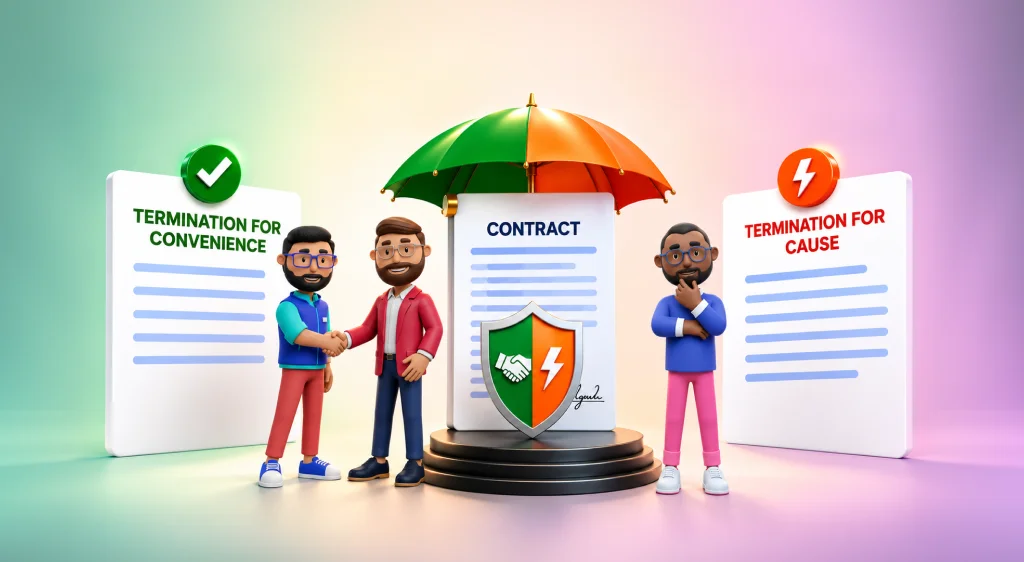
Termination for Convenience vs Termination for Cause: Key Differences
Termination for convenience vs termination for cause: what each clause allows, the notice and cure steps, what you owe, and how to draft both clearly.
 Discover our mission, commitment to our customers, and leadership team.
 Stay updated with our latest news and announcements.
 Learn about the latest BoldSign products and company news.
 Earn ongoing referral fees by embedding and referring BoldSign to clients.
 Connect with us if you have any questions or need help.
 Your business is protected with BoldSign.
 Earn commission by promoting BoldSign via your site, blog, or socials.
 Join our team and build innovative software solutions.
 See the love for BoldSign from users about their experience.
Christine Akinyi Omolo is a lawyer at Syncfusion, where she manages corporate legal matters, drafts insightful legal blogs, and creates clear, practical contract templates. She is committed to simplifying complex legal concepts and supporting organizations with effective, business‑aligned legal solutions. Connect with her on LinkedIn.
Termination for convenience vs termination for cause: what each clause allows, the notice and cure steps, what you owe, and how to draft both clearly.

A survival clause in contract terms keeps duties like confidentiality, payment and indemnity alive after a deal ends. See what survives and how to word it.

Learn how an assignment clause decides if a contract can move to another company, when you need consent, and how an assignment differs from a novation.

Learn what the ESIGN Act asks you to tell consumers before you send records electronically, how to collect that consent, and how to keep clear proof of it.
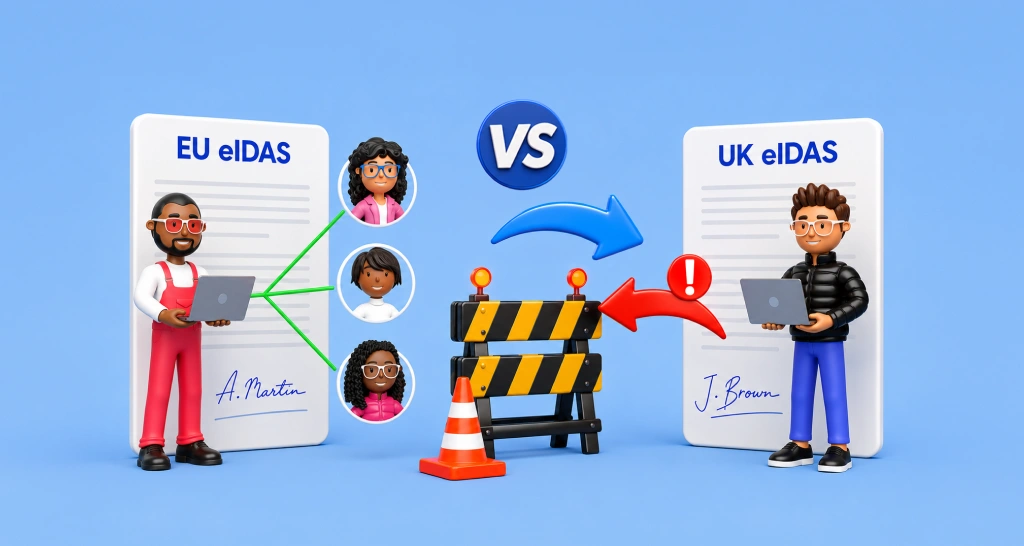
Compare UK eIDAS and EU eIDAS after Brexit. Learn about mutual recognition, QES requirements, eIDAS 2.0, cross-border compliance rules, and legal differences.

How long to keep e-signed records under the ESIGN Act and US federal rules, what to keep with each signature, and how we store and delete signed files.